How Much Does a 3D Printer Cost in 2027? ($169 to $2,500+ Price Tiers)
How much does a 3D printer cost in 2027? Explore hardware tiers from $169 to $2,500+, plus hidden first-year filament, electricity, and part TCO.
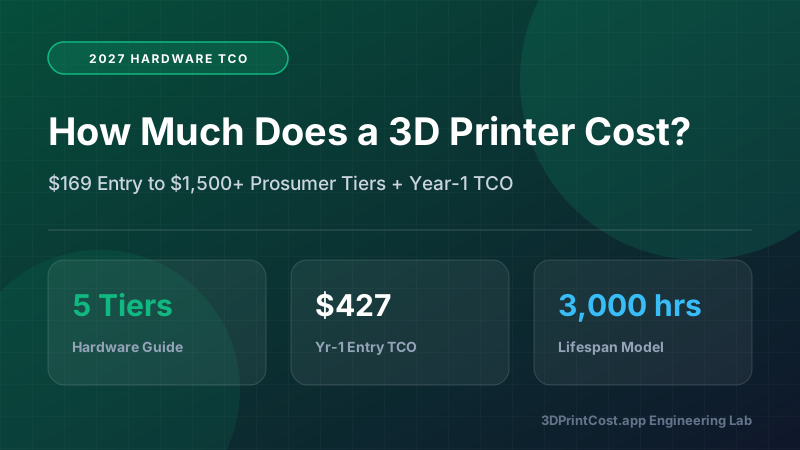
- ✓ Entry-Level Budget Tier ($169–$299): Delivers fully automated bed leveling, 250–500 mm/s speeds, and reliable PLA/PETG/TPU printing (e.g., Bambu A1 Mini, Ender 3 V3 SE/KE).
- ✓ Enthusiast & Multi-Color Tier ($339–$799): Adds 256 mm build volumes, 4-color AMS/ACE units, or enclosed CoreXY chambers for ABS/ASA (e.g., Bambu A1, P1S, Creality K1C).
- ✓ Prosumer & Engineering Tier ($849–$1,599): Features active 60–65°C heated chambers, 350–370°C nozzles for PPA-CF/PPS-CF, and 350 mm build volumes (e.g., Qidi Plus 4, Prusa CORE One, K2 Plus).
- ✓ First-Year Total Cost of Ownership (TCO): Always budget an extra $140 to $280 in Year 1 for filament (8–12 kg), a heated filament dryer, electricity, and spare nozzles.
- ✓ Resin Printers Have a Hidden $120 Mandatory Entry Fee: A $269 MSLA resin printer actually costs ~$390 on Day 1 once you add a UV wash-and-cure station, IPA solvent, and PPE.
Upfront Sticker Price vs. True First-Year Cost of Ownership
When someone asks, "How much does a 3D printer cost in 2027?", there are actually two separate engineering equations at play: the Day-1 Hardware Acquisition Cost ($169 to $2,500+) and the 12-Month Total Cost of Ownership (TCO)—which bundles filament, electricity, heated drying, build plates, and wearable consumables. If you are looking specifically for the cost of individual printed parts (grams and cents per hour), bookmark our companion How Much Does 3D Printing Cost Per Print Guide and run your own STL numbers inside our 3D Print Cost Calculator.
In this comprehensive 2027 hardware pricing breakdown, we dissect all five price tiers of the modern 3D printer market, showing you exactly what mechanical capabilities, kinematics, and materials unlock at every dollar level—and where diminishing returns begin.
The 5 Hardware Price Tiers in 2027: Master Comparison Table
Here is what your money buys across every segment of the desktop 3D printing market in 2027:
| Price Tier | Hardware MSRP | Kinematics & Frame | Max Nozzle / Chamber | Supported Materials | Flagship Models |
|---|---|---|---|---|---|
| 1. Entry Budget | $169–$299 | Open Bed-Slinger / CoreXZ | 260–300°C / Ambient | PLA, PETG, TPU 95A | Bambu A1 Mini, Ender 3 V3 SE, V3 KE |
| 2. Open Multi-Color & Mid | $339–$499 | Open 256mm / 4-Spool Changer | 300°C / Ambient | PLA, PETG, TPU (4-Color) | Bambu Lab A1, Anycubic Kobra 3 Combo |
| 3. Enclosed CoreXY Workhorse | $469–$799 | Enclosed CoreXY (Passive 45°C) | 300–320°C / 45–50°C | PLA, PETG, ABS, ASA, PA-CF | Bambu P1S, Creality K1C, Centauri Carbon |
| 4. Prosumer & Active Heated | $849–$1,599 | Enclosed CoreXY (Active 60–65°C) | 350–370°C / 60–65°C | PC, Nylon, PPA-CF, PPS-CF | Qidi Plus 4, Prusa CORE One, K2 Plus |
| 5. Industrial / Multi-Toolhead | $1,999–$3,999 | 5-Toolchanger / Dual-Nozzle | 300–350°C / 60°C | Zero-Waste Multi-Material | Prusa XL (2–5 Tool), Bambu H2D / X1E |
Tier-by-Tier Hardware Breakdown: What Every Dollar Buys
Tier 1: Entry-Level Budget FDM ($169–$299) — The Death of Manual Tinkering
Five years ago, buying a $199 printer meant spending your entire weekend tightening eccentric nuts, sliding a piece of paper under four bed-leveling knobs, and flashing Marlin firmware. In 2027, our Budget 3D Printers tier ($169–$299) includes strain-gauge or eddy-current automatic bed leveling, direct-drive extruders, flexible PEI spring-steel build plates, and 15-minute 3DBenchy speeds right out of the box.
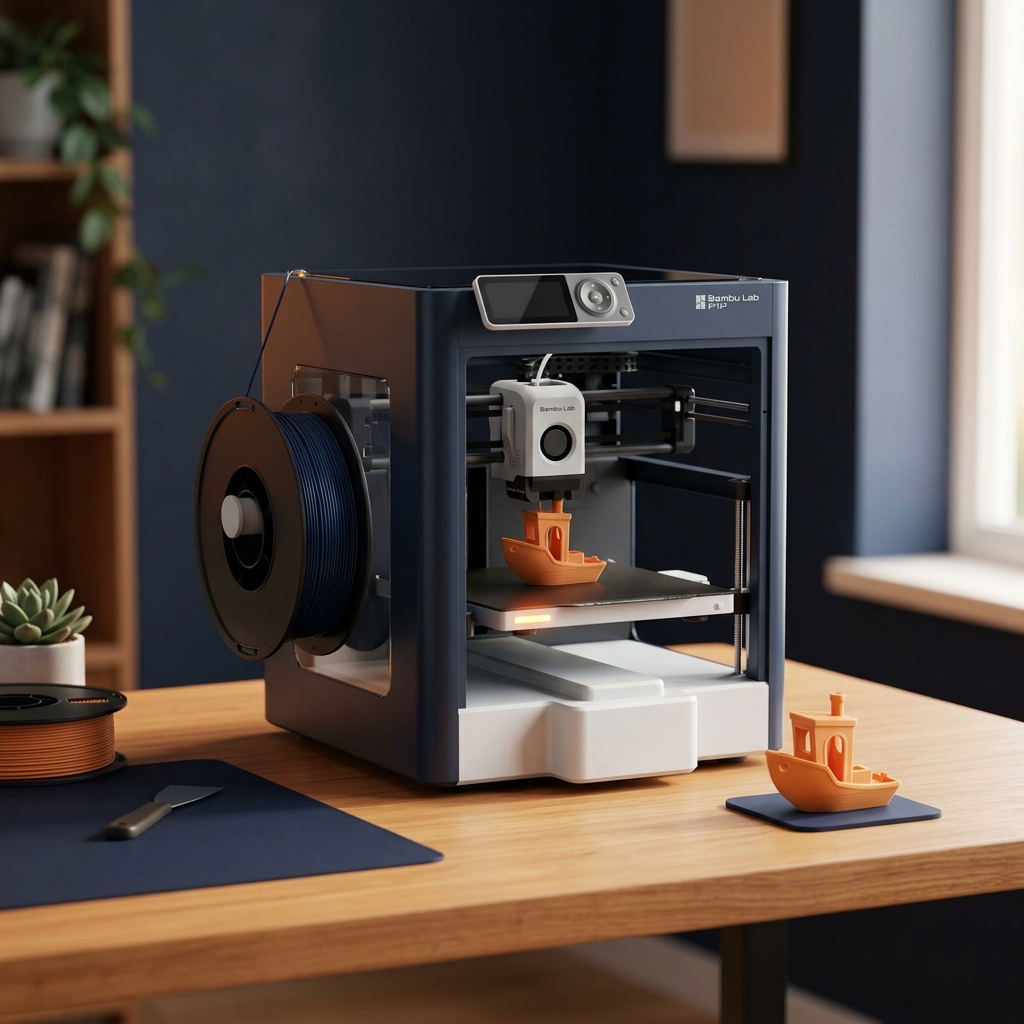
The Creality Ender 3 V3 SE (~$169) serves as the lowest-cost entry point worth buying, while the Bambu Lab A1 Mini (~$199) sets the industry standard for silent, zero-maintenance operation. Moving up to $249–$299 (see our Best 3D Printer Under $300 Guide) gets you the Creality Ender 3 V3 KE (~$259) or Elegoo Neptune 4 Pro (~$249) with 300°C all-metal hotends and full 220–225 mm beds.
Tier 2: Enthusiast Open-Frame & Entry Multi-Color ($339–$499)
Crossing $300 solves the two main limitations of Tier 1: build plate size and single-color feeding. At ~$339, the standalone Bambu Lab A1 expands the build envelope to a generous 256 × 256 × 256 mm (16.7 liters)—large enough for one-piece cosplay helmets, full-size shoe prototypes, and 6×6 Gridfinity workshop drawers. Between $399 and $489, you can purchase complete 4-color automatic material changer bundles like the Anycubic Kobra 3 Combo (~$399) or Bambu Lab A1 Combo (~$489).
Tier 3: Enclosed CoreXY Workhorses ($469–$799) — The Print Farm Sweet Spot
Why do serious functional makers and Etsy sellers gravitate toward the $469 to $799 bracket in our Mid-Range 3D Printers Directory? Two reasons: CoreXY kinematics and an enclosed build chamber. On a bed-slinger, the heavy Y-axis bed flings your tall print back and forth at 300 mm/s, causing tall, skinny parts to wobble or detach. On a CoreXY machine—like the Flashforge Adventurer 5M Pro (~$469), Elegoo Centauri Carbon (~$499), Creality K1C (~$519), or Bambu Lab P1S (~$599 standalone / ~$799 AMS Combo)—the build plate only moves slowly down in Z while the ultralight carbon-rod or linear-rail toolhead zips across X and Y at up to 20,000 mm/s² acceleration.
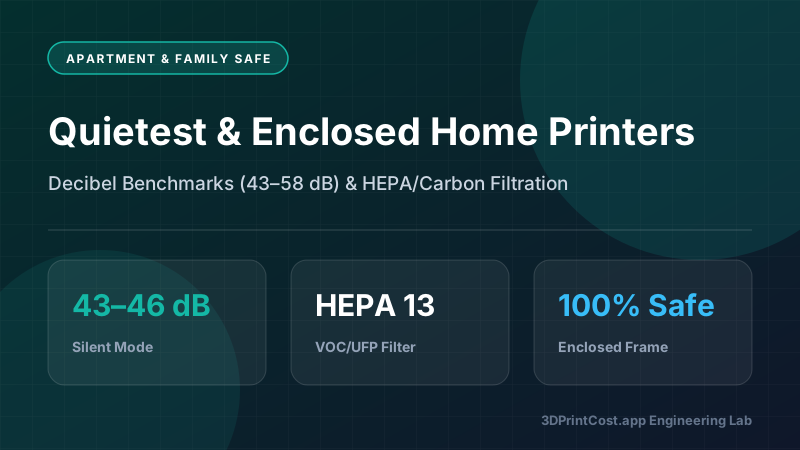
Equally important, the sealed panels trap heat from the 100–110°C bed to maintain a 45–50°C passive chamber temperature, letting you print UV-resistant outdoor ASA brackets, automotive ABS mounts, and carbon-fiber PETG without layer splitting.
Tier 4: Prosumer & Active Heated Chamber Flagships ($849–$1,599)
When passive chamber heat isn't enough for high-crystalline engineering polymers—or when you need a cavernous 300 mm to 350 mm build volume—you step into our Professional 3D Printers tier. Standouts here include the Qidi Tech Plus 4 (~$849) with a 305 × 305 × 280 mm build volume, 400W active 65°C chamber heater, and 370°C nozzle capable of printing industrial PPS-CF and PPA-CF; the rugged European-built Prusa CORE One (~$1,199); the Bambu Lab X1 Carbon (~$1,199 / ~$1,449 Combo); and the mammoth 350 × 350 × 350 mm Creality K2 Plus Combo (~$1,499).
Tier 5: Desktop MSLA Resin Printers ($239–$499 + Mandatory $120 Safety Kit)
Photopolymer resin printers occupy a parallel price curve. While the Elegoo Mars 5 Ultra (~$269) and medium-format 12K/16K Elegoo Saturn 4 Ultra (~$399) look inexpensive on paper, you cannot run a resin printer with just the machine in the box. You must budget an extra $115 to $145 on Day 1 for a 2-in-1 UV Wash & Cure station (~$89–$109), 4 liters of 99% Isopropyl Alcohol (~$24), nitrile gloves, and an activated-carbon air purifier.
First-Year Total Cost of Ownership (TCO) Audit Across 4 Setups
To prevent buyer’s remorse, we modeled the complete 12-Month Cash Outlay for a typical maker printing 10 hours per week (520 hours/year) and consuming 10 kg of filament (or 8 kg of resin) in Year 1:
| Year-1 Cost Category | Budget FDM (A1 Mini) | Mid-Range CoreXY (P1S) | Prosumer Engineering (Qidi Plus 4) | Resin Setup (Saturn 4 Ultra) |
|---|---|---|---|---|
| Upfront Printer Hardware | $199.00 | $599.00 | $849.00 | $399.00 |
| Mandatory Day-1 Accessories | $45.00 (1-Spool Dryer) | $55.00 (Dryer + Caliper) | $75.00 (70°C Anneal/Dryer) | $128.00 (Wash/Cure + PPE) |
| Year-1 Raw Material (10kg / 8kg) | $150.00 (PLA/PETG) | $185.00 (PLA/PETG/ASA) | $310.00 (ASA/PA-CF/PC) | $192.00 (8kg ABS-Like Resin) |
| 520 Hrs Electricity ($0.16/kWh) | $7.90 (95W avg) | $11.23 (135W avg) | $24.13 (290W w/ Chamber) | $4.58 (55W avg) |
| Wear Parts (Nozzles, PEI, ACF, IPA) | $24.00 | $38.00 | $48.00 | $84.00 (IPA + 2 ACF Films) |
| Total 12-Month TCO | $425.90 | $888.23 | $1,306.13 | $807.58 |
| Year-1 Cost Per Print Hour | $0.82 / hr | $1.71 / hr | $2.51 / hr | $1.55 / hr |
The Hidden Accessory Rule: The 20% First-Day Buffer
Regardless of which FDM price tier you choose, always reserve 18% to 22% of your total budget for three Day-1 essentials: a heated filament dryer ($45–$65), a 4-pack of neutral PLA/PETG ($52), and a spare spring-steel build plate + deburring tool ($28). Check our Essential 3D Printing Accessories Guide for exact part numbers.
3 Real-World Numerical Case Studies: Hardware ROI & Payback
Case Study 1: Homeowner & DIY Hobbyist Payback on a $199 Bambu Lab A1 Mini
A homeowner spent $296.00 Day-1 ($199 Bambu A1 Mini + $52 Elegoo 4-pack PLA + $45 dryer). Over the first 6 months (180 print hours, 3.6 kg of filament used = $46.80 material + $2.74 electricity), they printed 38 custom household replacements: 14 closet rod brackets, 6 Dyson vacuum wall docks, 12 drawer dividers, 4 broken dishwasher rack clips (in PETG), and 2 custom baby-gate latches:
- Equivalent Amazon/Hardware Store Retail Value of 38 Items: $418.50
- Total Cash Spent (Printer + Dryer + 4 kg Filament + Electricity): $298.74
- Net 6-Month Financial Return: The printer paid for 100% of its own purchase price in 4.2 months and generated +$119.76 in net household savings while leaving a fully paid-off printer on the desk!
Case Study 2: Etsy Side-Hustle Upgrade From $259 Bed-Slinger to $799 Bambu P1S Combo
A part-time Etsy seller printing custom automotive cup-holder adapters in high-temp ASA was struggling with a 19% warping failure rate on an open bed-slinger inside a tent. They invested $799.00 in an enclosed Bambu Lab P1S Combo:
- Defect Rate Reduction: Warping failures dropped from 19.0% down to 1.8%, saving $1.42 in wasted ASA filament and 2.1 hours of machine time per 10 units produced.
- Throughput Gain: Enclosed CoreXY acceleration cut per-adapter print time from 2.4 hours down to 1.55 hours (+35.4% daily output), while automatic AMS spool-over let the printer finish 14-hour overnight plates unattended.
- Payback Period: Selling 18 adapters per week at $24.99 ($15.80 net contribution margin per unit), the extra throughput and eliminated scrap paid back the entire $799 P1S Combo in just 3.1 weeks (51 orders).
Case Study 3: Mechanical Engineering Startup Prototyping on $849 Qidi Tech Plus 4
A robotics startup needed 16 structural glass-fiber nylon (PA6-GF) actuator housings. An external online service bureau quoted $145.00 per housing ($2,320.00 total) with a 9-business-day lead time. Instead, the team bought a Qidi Tech Plus 4 ($849) with a 65°C active heated chamber and 3 spools of Polymaker PA6-GF ($78/kg × 3 = $234):
- Total In-House Hardware + Material + Electricity Cost: $849.00 printer + $234.00 filament + $6.40 electricity (96 print hours @ 415W) = $1,089.40
- Immediate First-Batch Savings: $1,230.60 saved on Batch #1 alone (53% cheaper than outsourcing once), with 48-hour design iteration turnaround!
Amortization Formula: How Much Does Your Printer Cost Per Hour?
To calculate hardware depreciation for any price tier, divide the printer’s upfront cost (minus a 15% salvage value) by its expected 3,500-hour commercial service life: Hourly Depreciation = (Purchase Price × 0.85) ÷ 3,500 Hours. Thus, a $199 printer depreciates at $0.048/hr, a $599 printer at $0.145/hr, and a $1,499 printer at $0.364/hr.
Used vs. New 3D Printers: Should You Buy Second-Hand in 2027?
Because the 3D printer market transitioned so rapidly from slow 60 mm/s Cartesian machines to 500 mm/s auto-calibrating systems, local marketplaces are flooded with used printers. Follow these two rules before buying second-hand:
1. Avoid Legacy Pre-2024 Bed-Slingers Even at $50
An older manual-leveling printer (such as an original Ender 3 Pro or V2) listed for $50–$75 will quickly cost you more than $120 in replacement hotends, BLTouch probes, PEI sheets, and wasted filament—while still printing 4× slower than a brand-new $169 Creality Ender 3 V3 SE.
2. Inspect Frame Hours on Used Bambu Lab & Prusa Machines
Second-hand Bambu Lab P1S or Prusa MK4S machines hold 70%–80% of their retail value. Always check the internal odometer inside the printer’s settings menu before paying: a machine with under 1,200 hours at 25%–30% off MSRP is a great deal, whereas a 4,500-hour ex-print-farm unit will soon need carbon-rod, belt, and extruder gear replacements.
Summary: Which Price Tier Should You Buy Today?
- Under $250 Budget: Buy the Bambu Lab A1 Mini (~$199) or Creality Ender 3 V3 KE (~$259).
- $350–$500 Budget: Buy the Bambu Lab A1 (~$339 / $489 Combo) or Anycubic Kobra 3 Combo (~$399).
- $500–$800 Budget: Buy the enclosed Bambu Lab P1S (~$599 / $799 Combo) or Creality K1C (~$519).
- $850–$1,500 Budget: Buy the Qidi Tech Plus 4 (~$849), Prusa CORE One (~$1,199), or Creality K2 Plus (~$1,499).
*Pricing Note: All dollar figures listed in our 2027 guides represent estimated manufacturer reference MSRPs or measured lab electricity/filament averages at the time of testing. Click any Amazon button to verify live pricing and stock.
Frequently Asked Questions (2027 FAQ)
How much should a beginner spend on their first 3D printer in 2027?
For 85% of first-time makers in 2027, spending between $199 and $399 on hardware (or $295 to $495 all-in with your first 4 spools of filament and a filament dryer) hits the sweet spot of plug-and-play reliability without paying for high-temperature industrial features you will not use.
Why do some desktop 3D printers cost $1,400 while others cost $199?
A $199 printer uses an open aluminum cantilever or Cartesian frame designed for low-shrinkage PLA and PETG. A $1,200–$1,500 machine adds an enclosed CoreXY frame, active 60°C chamber heater, hardened steel drivetrain for abrasive carbon fiber, AI spaghetti cameras, and a 300–350 mm build volume.
Are sub-$150 "toy" 3D printers worth buying for kids?
No. Ultra-cheap $99–$139 toy printers sold on discount marketplaces usually have tiny 100 × 100 mm unheated beds, proprietary filament cartridges, 40 mm/s speeds, and no auto-leveling—causing endless failed prints. Spend $169 on a Creality Ender 3 V3 SE or $199 on a Bambu Lab A1 Mini instead.
What are the biggest hidden costs of owning a 3D printer in the first year?
The four most common unbudgeted Year-1 expenses are filament consumption (most hobbyists go through 8 to 15 spools at $14–$22/kg = $130–$260), a heated filament dryer ($45–$65), a spare textured or smooth PEI spring-steel build plate ($22), and replacement hardened steel nozzles ($15–$25).
Does a more expensive 3D printer cost more per hour to run?
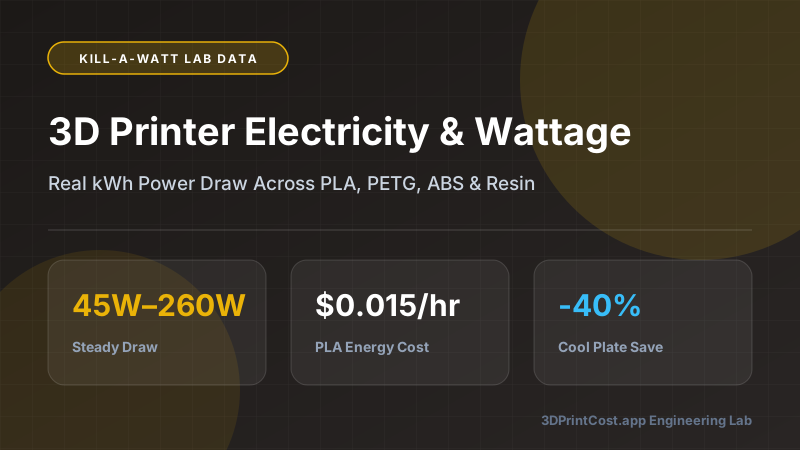
Only slightly in electricity (140W–260W vs. 95W on a mini printer), and mostly in hardware depreciation ($0.25–$0.40/hr vs. $0.07/hr). However, because an enclosed $600–$1,200 CoreXY printer prints 30% faster and suffers fewer warped failures, its cost per finished functional part is often lower.
How long does a modern 3D printer last before needing replacement?
A well-maintained 2027 desktop FDM printer typically runs for 3,500 to 6,000 printing hours (roughly 3 to 5 years of heavy hobbyist or Etsy farm use) before requiring major motion-system rebuilds, with routine consumables like belts, PTFE tubes, and nozzles replaced every 600 to 1,000 hours.
Related 2027 Guides
Calculate Your True Cost Per Print
Model filament weight, multi-color AMS purge waste, local kWh electricity rates, and Etsy profit margins in our interactive calculator.